December 5, 2025

Sustainable Pharmaceutical Packaging: Reducing Plastic Waste
As global demand for medications grows, so does the volume of single-use plastic packaging used to store them, much of which is difficult to recycle and contributes to long-term environmental waste. This reality is accelerating the need for more sustainable packaging approaches across the pharmaceutical industry.
Sustainable packaging refers to materials and design choices that minimize environmental impact while maintaining product quality, safety, and effectiveness. With sustainability becoming a priority among consumers, regulators, and healthcare brands, pharmaceutical companies are rethinking sustainable packaging for pharmaceuticals. Innovations in recyclable materials, renewable fibers, and reduced-plastic designs are emerging as credible solutions that support both environmental responsibility and patient safety.
The Environmental Impact of Plastic Pharmaceutical Packaging
Plastic pharmaceutical packaging relies on plastic-based products such as blister packs, bottles, plastic pill vials, and syringes that are valued for their durability and protective qualities. However, many of these formats are made from complex combinations of plastics, aluminum, or glass. These pharmaceutical used mixed-material structures are extremely difficult to separate and therefore rarely accepted in standard recycling streams. As a result, most pharmaceutical packaging ends up in landfills or oceans, where it can take centuries to degrade and may release microplastics into the environment. During degradation, packaging waste may leach harmful plasticizers into ecosystems, posing risks to wildlife and human health.

The environmental impact extends beyond waste. One study estimates that the pharmaceutical industry is responsible for emitting 52 million metric tons of CO₂ annually, reflecting the energy-intensive processes involved in producing plastics, manufacturing packaging, and transporting goods throughout the supply chain.
With millions of prescriptions filled daily in the United States alone, waste from bottles, caps, and blister packs continues to accumulate. Companies are exploring bio-sourced materials and recyclable content, but gaps in recycling infrastructure and end-of-life processes remain substantial challenges.
Growing Consumer Awareness and Demand for Eco-Friendly Solutions
As sustainability becomes a growing priority among businesses and consumers, eco-friendly alternatives are emerging as viable solutions. Approximately 90% of consumers report a willingness to likely buy for sustainable packaging, signaling strong demand for greener options.
Companies are exploring renewable materials, PCR (Post-Consumer Recycled) plastic content, and compostable or responsibly sourced packaging. However, challenges remain as alternative materials still require resources and energy to produce, and many packaging formats lack proper end-of-life infrastructure to ensure efficient recycling or composting.
Thus, improving material design, manufacturing efficiency, and waste management systems will be essential to reducing the environmental footprint of pharmaceutical packaging over time.
Regulatory Considerations for Sustainable Packaging
In the United States, regulatory requirements strongly influence how quickly the pharmaceutical industry can adopt sustainable packaging. The Food and Drug Administration (FDA) prioritizes patient safety, requiring packaging to maintain drug stability, sterility, and integrity. While the FDA does not currently mandate sustainability standards, it encourages manufacturers to consider environmental impact when selecting materials, as long as safety remains uncompromised.
Several states are now implementing Extended Producer Responsibility (EPR) programs, which require companies to take financial or operational responsibility for the end-of-life management of their packaging. These programs incentivize recyclable materials, reduced packaging formats, and clearer labeling. Industry standards from ISO and the U.S. Pharmacopeia (USP) also guide material selection and lifecycle assessment. However, any new eco-friendly material must undergo strict compatibility, stability, and safety testing processes that can be resource-intensive and time-consuming.
While the U.S. regulatory environment does not yet mandate sustainable pharmaceutical packaging, evolving policies and increasing consumer expectations are pushing companies toward greener solutions.
Innovative Materials Transforming Pharmaceutical Packaging
As pharmaceutical companies look to reduce their environmental impact, several material innovations are emerging as strong alternatives to traditional plastics. These solutions help lower carbon emissions, reduce waste, and support the shift toward more sustainable packaging without compromising medication safety.
Bio-Based & Biodegradable Materials
One of the most promising developments in sustainable pharmaceutical packaging is the use of bio-based and biodegradable materials. These eco-friendly options are made from renewable sources such as cellulose, plant-based polymers, and compostable films and are increasingly used in applications that don’t require direct contact with medications.
Benefits:
- Derived from renewable, plant-based sources
- Lower carbon footprint compared to petroleum-based plastics
- Suitable for secondary packaging
Post-Consumer Recycled (PCR) Plastics
PCR plastics incorporate recycled content from consumers, helping close the loop on plastic use. When safely applied, PCR significantly reduces reliance on virgin plastics.
Benefits:
- Reduces demand for new petrochemical materials
- Supports circular manufacturing systems
- Suitable for bottles, caps, and secondary packaging
Lightweighting Strategies
Lightweighting focuses on optimizing packaging design to use less material while still maintaining durability and product protection. This strategy reduces both resource consumption and emissions across the supply chain.
Benefits:
- Lowers material usage and production waste
- Reduces transportation weight and related carbon emissions
- Can be applied across bottles, closures, cartons, and outer packaging
Together, these innovations reduce reliance on traditional plastics and set the stage for more transformative solutions such as paper pill bottles.
A Breakthrough in Paper-Based Pharmaceutical Packaging
As we evaluated the pharmaceutical industry's efforts to move away from plastic packaging, it became clear that existing alternatives were falling short. We began exploring how paper, one of the most renewable and widely recycled materials, can be engineered for pharmaceutical packaging.
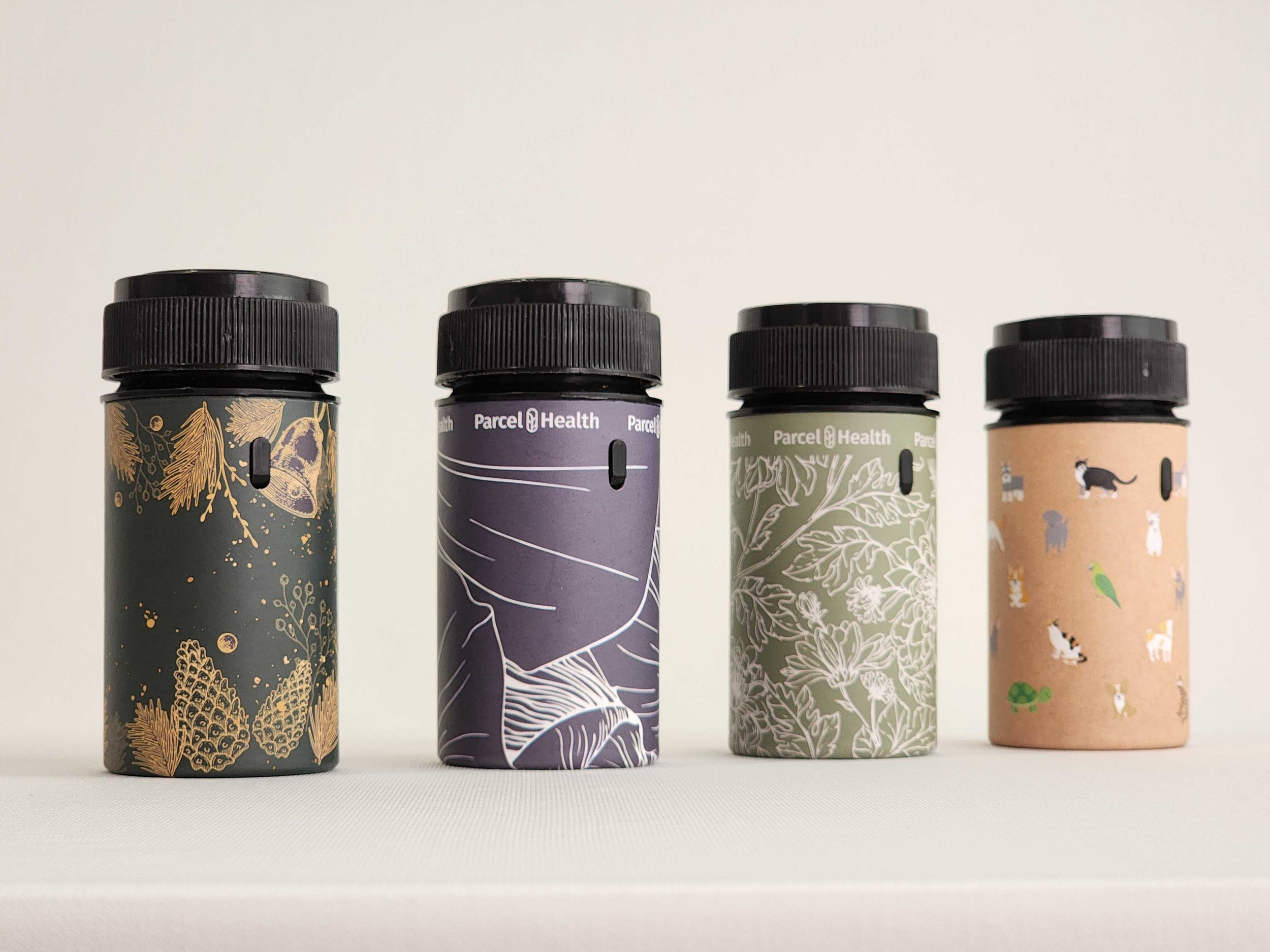
Tully Tube — the world’s first paper pill bottle is the embodiment of what paper-based pharmaceutical packaging can achieve. Designed to replace traditional plastic bottles without compromising medication safety, Tully Tube showcases how renewable materials and thoughtful engineering can create a new standard for eco-friendly healthcare packaging.
• Made From Renewable Fibers - Tully Tube is constructed primarily from responsibly sourced cellulose fibers, reducing reliance on petroleum-based plastics and supporting a renewable packaging supply chain.
• Recyclable and Biodegradable by Design - Engineered to be easily recycled through standard paper streams. The paper base of Tully Tube also breaks down in the environment, offering patients a solution that won’t linger as plastic waste.
• Structurally Strong and Protective - Through careful material engineering and testing, Tully Tube maintains excellent durability, humidity- and moisture- resistance, and thermal stability, ensuring medications stay protected throughout its shelf life.
• Designed for the patient experience - The Tully Tube goes beyond material safety to enhance the entire patient experience. Consistent medication adherence is a key element to longevity, so we developed the Tully Tube to transform this daily routine into one of beautiful self-care.
The Tully Tube is more than a packaging innovation, it is a proof point that sustainability and pharmaceutical safety can coexist. By reimagining what a pill bottle could be, Parcel Health is helping shape a future where healthcare packaging is both high-performing and environmentally responsible.
A Greener and Sustainable Packaging for Pharmaceuticals
The environmental and safety impact of pharmaceutical packaging can no longer be overlooked. As plastic waste continues to grow, the need for eco-friendly and safe packaging solutions has become more urgent than ever. By adopting better materials that are recyclable, renewable, and patient-centered, pharmacies can protect patients and preserve the planet.
Ready to take the next step toward eco-friendly packaging?
Explore our sustainable solutions to learn how your organization can reduce plastic use and strengthen patient trust through eco-friendly packaging.
Others you might like
Check out some of our latest blog posts.
.png)
.jpeg)