March 30, 2026

Pharmaceutical Elegance: The Hidden Message in Your Pill Bottle
At a Glance
- Prescription packaging has long been designed for efficiency and compliance, but it often overlooks the role packaging plays in shaping patient trust and experience.
- The concept of pharmaceutical elegance highlights how thoughtful, sustainable, and patient centered packaging can better reflect the quality of care behind the medication.

When a patient receives medication, the first interaction is not with the physician or the pharmacist: itis with the packaging. For millions of patients, that interaction looks the same: a classic amber prescription bottle designed primarily for cost efficiency and safety compliance. While the amber bottle serves a practical function, it rarely feels intentional.
Packaging may seem like a small detail in the broader healthcare journey, yet it quietly communicates powerful signals. Every design choice, including material, form, labeling, and usability, reflects the priorities of the system behind it. To patients, the container holding their medication can shape perceptions about care, trust, and even the quality of the treatment itself.
The New Patient Experience
Healthcare is increasingly recognizing that the patient experience extends beyond clinical interactions. Every touchpoint shapes how patients perceive the system caring for them. From scheduling appointments to receiving prescriptions, these moments collectively influence trust and satisfaction. Packaging now plays a larger role in this experience than many realize. Patients use pharmaceutical packaging daily, making it one of the most consistent physical reminders of their treatment journey.
Why Traditional Amber Pill Bottle Still Exists
For decades, the amber pill bottle has served its purpose well. Its design reflects an earlier era of healthcare that focused almost entirely on operational efficiency and regulatory compliance. While this approach ensured safety and affordability, it paid little attention to the emotional or experiential aspects of patient care.
As a result, the amber bottle can unintentionally communicate standardization over personalization, utility over care, and a transactional experience rather than a thoughtful one. The container holding a patient’s medication feels more like packaging from a supply chain than from a healthcare provider.
Meanwhile, the pharmaceutical packaging industry is evolving rapidly. Several trends are reshaping how medications are delivered to patients:
- Sustainability-driven packaging innovation
- Smart packaging and digital labeling
- Anti-counterfeiting and enhanced safety features
- Personalized and accessible packaging
- Growing regulatory convergence and compliance standards
These developments reflect a broader shift toward pharmaceutical elegance, a concept that emphasizes thoughtful, patient-centered packaging design. Pharmaceutical elegance represents a shift toward packaging that reflects care, clarity, and intentional design. It ensures that the container communicates the same quality and trust patients expect from their healthcare providers.
What is Pharmaceutical Elegance?
Pharmaceutical elegance is an age-old principle in pharmacy. It recognizes that healing does not occur only through the medications we consume, but also through the care and precision in their presentation. Historically, pharmacists believed that a well-prepared medicine should reflect equal attention in its form, labeling, and packaging.
Every detail contributed to patient understanding and trust. From the shape of a tablet to the design of its container, presentation reinforced the credibility and professionalism of the medication itself. Even something as simple as a wrinkled label or poorly designed container could interfere with patient confidence or clarity.
Today, pharmaceutical elegance extends beyond aesthetics and represents a holistic approach to medication packaging that emphasizes safety, reliability, usability, and sustainability.
Packaging Is Part of the Patient Experience
Across industries, packaging has long been recognized as a critical part of brand perception. Thoughtful packaging signals quality, trust, and professionalism before a product is even used. Consumers often form impressions about a product’s reliability based on how it is presented.
Healthcare is now catching up to this idea. Pharmaceutical packaging is evolving toward patient-centered design, with innovations focusing on usability, accessibility, and emotional experience rather than solely protection and compliance. In this way, packaging becomes more than a container; it becomes an integral part of the care experience.
How Packaging Communicates
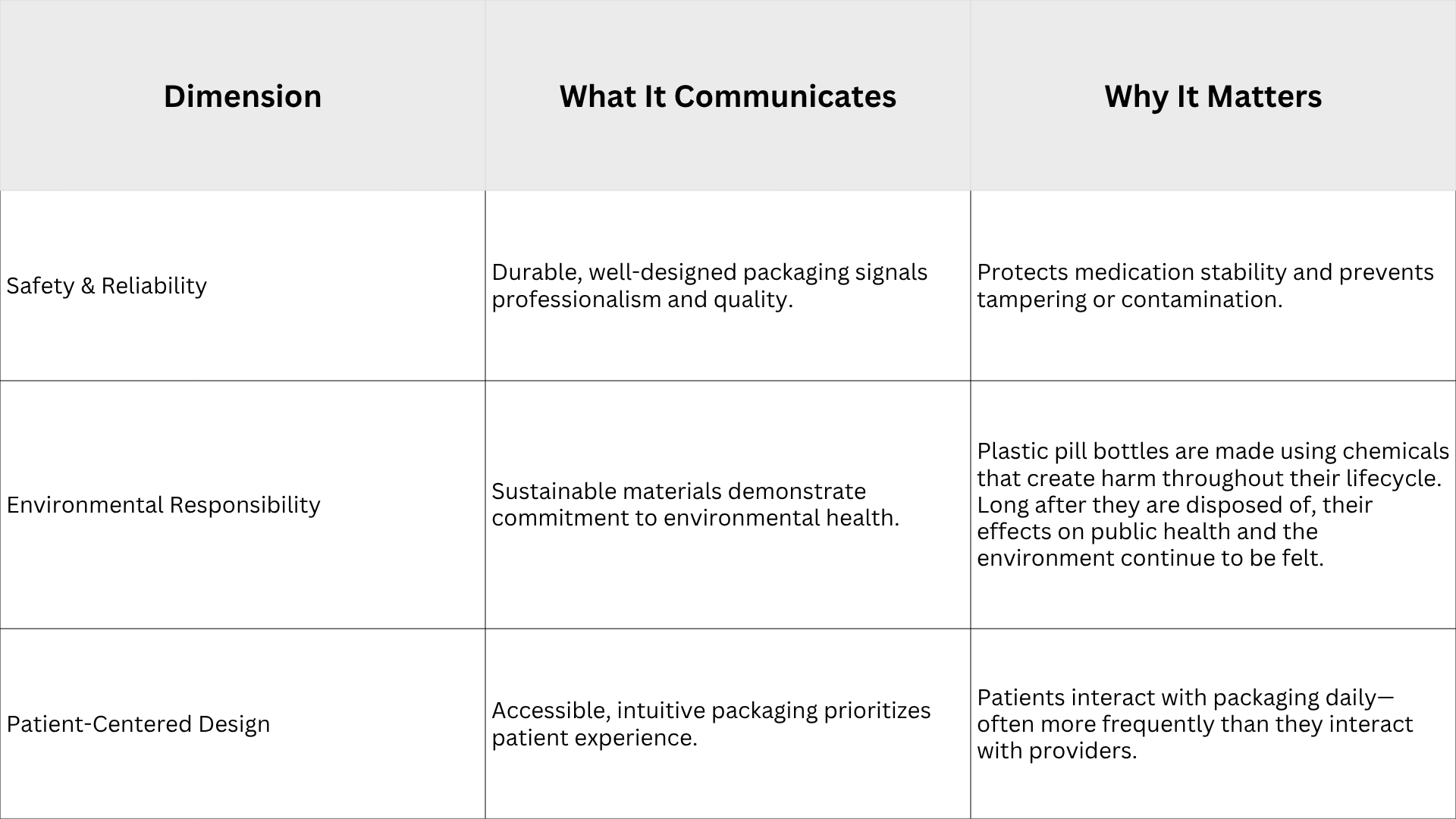
Healthcare packaging reflects the values and priorities of the system delivering it.
Understanding Pharmaceutical Elegance Today
Pharmaceutical elegance in packaging now reflects several core principles. Packaging must protect the medication’s integrity from production to patient use while also delivering clear and legible information that supports patient safety. It should be intuitive and easy to use for patients, pharmacists, and healthcare providers alike.
Sustainability has also become an increasingly important consideration. Reducing environmental impact while maintaining functionality and safety is now part of responsible pharmaceutical design. At the same time, packaging must meet stringent regulatory standards to ensure compliance and patient protection.
When these elements are thoughtfully integrated, packaging does more than improve aesthetics. It strengthens patient trust, improves usability, and reinforces confidence in the healthcare system delivering the medication.
Parcel Health Redefining Pharmaceutical Elegance
From the precision of a perfectly formulated medication to the design of its packaging, pharmaceutical elegance reflects a commitment to the highest standards of care. Parcel Health’s proprietary solution, Tully Tube, represents a modern interpretation of this principle.
Designed with sustainability, functionality, and patient usability in mind, Tully Tube demonstrates how packaging can support both environmental responsibility and patient trust. Paired with Parcel Prompt, it keeps prescription labels secure helping build trust with patients while cutting down on waste.By rethinking traditional prescription containers, Parcel Health is helping healthcare systems align their packaging with the values they seek to represent.
Elegance in pharmaceutical packaging is no longer a luxury. It is becoming a necessity. Paper-based packaging solutions represent one step forward in this transformation, protecting both patients and the planet one prescription at a time. By adopting these solutions, pharmacies and healthcare systems can continue delivering safe medications while supporting broader environmental and public health goals.
The Real Question: What Should Healthcare Signal?
Every prescription bottle sends a message. The traditional orange vial signals efficiency and standardization, reflecting decades of healthcare systems focused on operational practicality.
But healthcare is moving toward something different. Modern systems increasingly emphasize personalized care, patient engagement, sustainable practices, and experience-driven healthcare delivery. If these are the values healthcare systems want to communicate, then the packaging patients receive must evolve to reflect them. When a patient picks up their medication, they are not simply receiving treatment. They are also receiving a message about the system caring for them.
If you want to transform how patients perceive healthcare, embrace a shift toward care, clarity, and intentional design, Contact us to start your transformation today.
Others you might like
Check out some of our latest blog posts.