September 20, 2026

Flexible Packaging for Pharmacy Dispensing
Innovation in flexible packaging is accelerating as companies and researchers look for alternatives to conventional plastic film. Plastic Today reported that the Flexible Film Recycling Alliance launched two commercial film recycling pilots in California. The programs target polyethylene film and wraps generated by warehouses, distribution centers, retail backrooms and manufacturing facilities. Packaging Digest also reported that researchers in Argentina have also developed and tested compostable biopolymer films as potential replacements for conventional PVC packaging used for beef. Much of this innovation, however, remains concentrated in food, beverage and retail applications.
Across the packaging industry, brands are reevaluating their material choices, reducing unnecessary packaging and exploring alternatives to conventional plastic. Biobased materials such as paper, fiber and certain biopolymers are gaining attention, although their environmental benefits depend on how they are produced and whether there are opportunities for circularity at the end of use. . Growing consumer expectations and changing regulations are adding urgency to the search for packaging that uses fewer or renewable resources and generates less waste.
One material frequently presented as a more sustainable alternative is polylactic acid, commonly known as PLA. However, determining whether PLA solves the problem requires looking beyond how manufacturers make the material to what happens after someone uses it.
From Conventional Plastic to Biobased Alternatives
Manufacturers commonly make conventional flexible plastic packaging from fossil-based materials, and it can persist in the environment for long periods. Plastic films are also difficult to collect and process through standard curbside recycling systems because they are difficult and expensive to recycle.
PLA, or polylactic acid, is a biobased plastic commonly produced from renewable plant-derived feedstocks, including corn starch and sugarcane. Unlike conventional plastics made primarily from petroleum-based raw materials, PLA replaces part of that fossil-based input with renewable resources.
Biobased materials cut fossil fuel use and emissions before the packaging is made, since the production process itself relies less on petroleum. That reduction happens from the start of manufacturing, regardless of what happens to the bag afterward. For pharmacy dispensing, the next phase is whether it can also be composted once it's served its purpose. Clear Baggies™ and Kraft Baggies™, our compostable dispensing bags, address that second phase.
A Better Flexible Packaging Solution for Pharmacy Dispensing
Pharmacy dispensing carries strict and specific safety requirements. Pharmacies have to carefully consider and approve moisture resistance, light protection for sensitive medications, patient safety and regulatory requirements before adopting any new material.
Introducing Baggies™
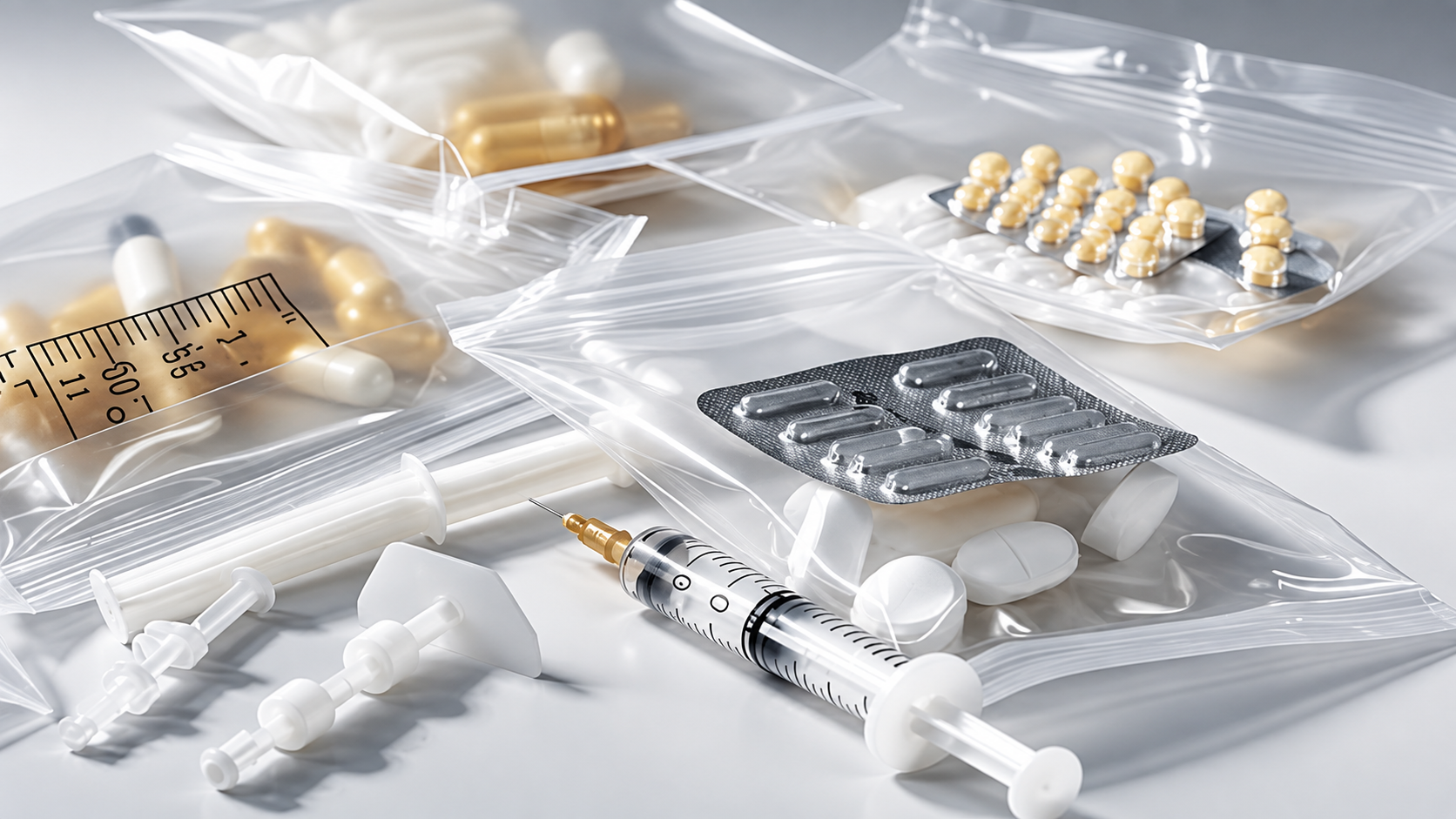
Baggies™ are dispensing bags made with ParcelFlex™, our proprietary blend of biobased materials and compostable polymers. The collection includes two options, each designed for a different dispensing need.
Parcel Flex™ carries third-party certifications for home compostability through TÜV Austria and commercial compostability through BPI. These certifications give pharmacies verified end-of-life pathways while preserving the resealable, printable and moisture-resistant functionality they rely on.
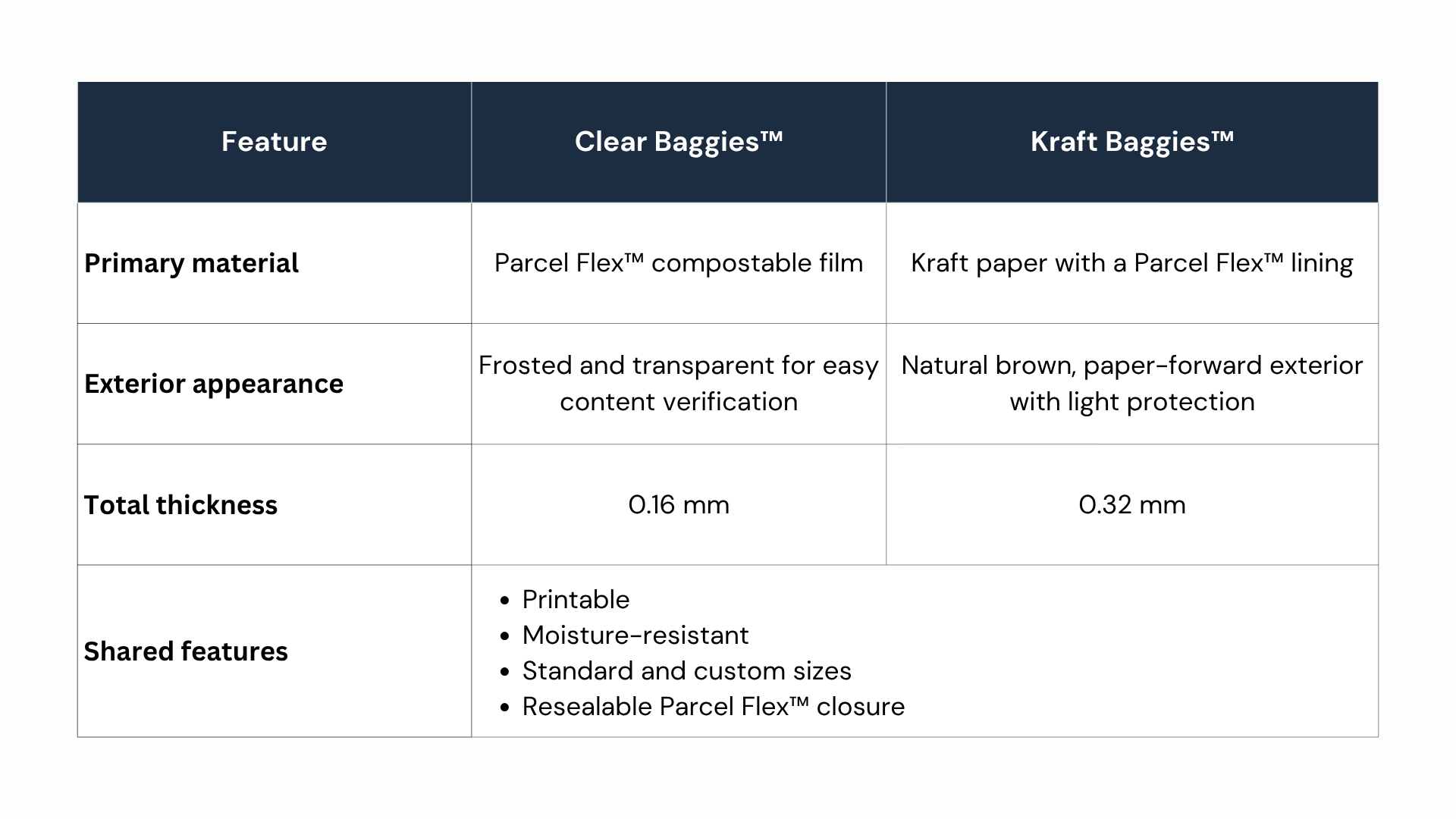
Clear Baggies™ provide a frosted, transparent dispensing bag with a resealable Parcel Flex™ snap closure. Pharmacists can easily check contents and labeling before handing a bag to a patient.The bags are moisture-resistant, printable and designed to provide the familiar visibility of conventional plastic dispensing bags and most importantly made from compostable material.
Kraft Baggies™ pair natural kraft paper with the same thin Parcel Flex™ lining. The lining adds moisture resistance beyond what an unlined paper bag can provide plus opaque packaging protection from light exposure, which matters for light-sensitive medications. Same resealable snap closure, same printable surface as Clear Baggies™, with the added durability and premium look pharmacies want.
Both Clear Baggies™ and Kraft Baggies™are designed to integrate into established pharmacy workflows without new packaging equipment.
Quick Comparison: Clear Baggies™ vs. Kraft Baggies™
Both materials offer biobased, compostable flexible packaging built for pharmacy and healthcare dispensing. The primary differences are exterior material, visibility, thickness and level of light protection, making both strong pharmacy packaging alternatives to plastic bags.
A Transition for Pharmacy Dispensing
Baggies™ give pharmacies, health systems, telemedicine providers and veterinary clinics a practical alternative to conventional fossil-based plastic dispensing bags.
By adopting compostable, plastic-free prescription packaging today, healthcare organizations can reduce their reliance on plastic film while maintaining the functionality their dispensing workflows require. Baggies™ carry the same TÜV Austria and BPI certifications behind every Parcel Flex™ product, giving pharmacies a verified end-of-life pathway instead of a plastic bag with nowhere to go.
Want to see how Clear Baggies™ or Kraft Baggies™ would look with your branding? Request a custom mockup today.
Others you might like
Check out some of our latest blog posts.